
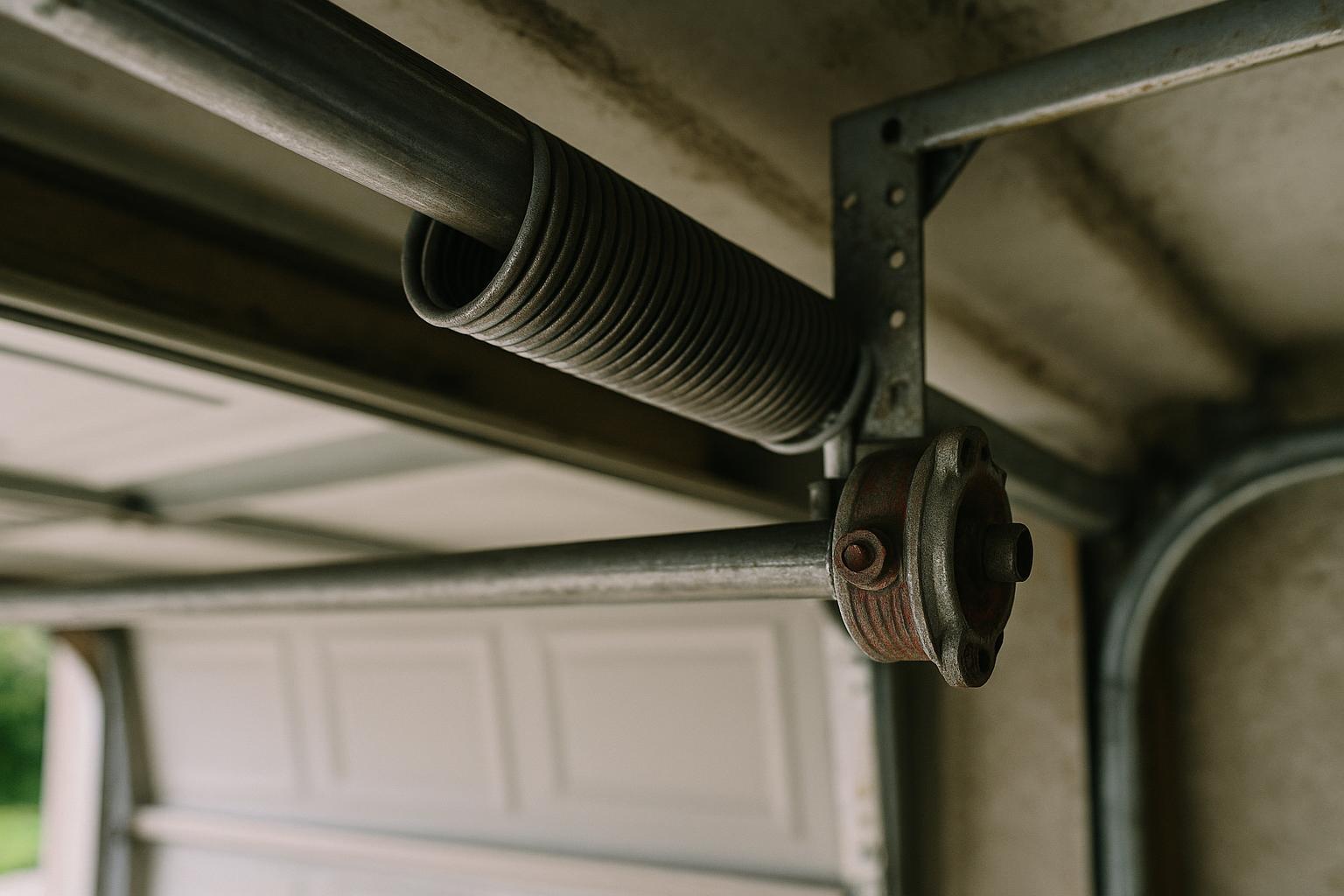
Your Garage Door Springs Are Doing More Work Than You Think
Every time you open or close your garage door, the springs are doing the heavy lifting — literally. A standard two-car garage door can weigh anywhere from 150 to 250 pounds, and the springs are responsible for counterbalancing all of that weight. Without them, your garage door opener couldn't move the door on its own, and lifting it manually would be nearly impossible.
Despite how critical they are, most homeowners in Canton don't think about their garage door springs until something goes wrong. And when a spring breaks, it's not subtle. You might hear a loud bang from the garage, find your door stuck halfway, or notice your opener straining to lift the door. Understanding the lifespan of your springs and recognizing the warning signs of wear can save you from an unexpected — and inconvenient — failure.
How Long Do Garage Door Springs Last?
The lifespan of a garage door spring is measured in cycles. One cycle equals one full open and one full close of the door. Most standard torsion springs are rated for approximately 10,000 cycles, which translates to roughly 7 to 10 years of typical use for an average household.
However, that number depends heavily on how often you use your garage door. Consider this:
- If you use your garage door twice a day (once to leave, once to return), that's about 730 cycles per year.
- If your household has multiple drivers coming and going throughout the day, you could easily hit 1,500 or more cycles per year.
- Families that use the garage as a primary entrance may put even more wear on the springs.
High-cycle springs rated for 25,000 or even 50,000 cycles are available and can be a smart investment, especially if your garage door sees heavy daily use. When we install or replace springs for homeowners across Stark County, we always discuss cycle ratings so customers can make an informed choice.
Torsion Springs vs. Extension Springs
There are two main types of garage door springs, and knowing which type you have can help you understand what to expect:
Torsion Springs
These are mounted on a metal shaft above the garage door opening. They use torque to lift the door and are the more common type found on modern garage doors. Torsion springs tend to last longer, operate more smoothly, and are generally considered safer than extension springs.
Extension Springs
These run along the horizontal tracks on either side of the door. They stretch and contract to assist with lifting. Extension springs are more common on older garage doors and lighter single-car doors. They typically have a shorter lifespan and can be more dangerous when they break if safety cables aren't installed.
If you have an older home in Canton or the surrounding areas like Massillon or Louisville, there's a good chance your garage door still uses extension springs. Upgrading to torsion springs during your next replacement is something worth considering.
Warning Signs Your Springs Are Wearing Out
Springs rarely fail without giving you some advance warning. Here are the signs to watch for:
- The door feels heavier than usual. If you disconnect the opener and try to lift the door manually, it should move with relatively little effort. If it feels extremely heavy, the springs may be losing tension.
- The door doesn't stay open. A properly balanced door should stay in place when you lift it halfway and let go. If it slides down, the springs are likely weakening.
- Visible gaps in the spring coils. Torsion springs that are nearing the end of their life may develop visible gaps or separation between the coils.
- The door opens unevenly. If one side of the door lifts faster than the other, one spring may be weaker or already broken.
- Your opener is struggling. If the motor sounds like it's working harder than normal or the door opens more slowly, worn springs could be putting extra strain on the opener.
- Rust on the springs. Rust increases friction and weakens the metal, which can significantly shorten a spring's lifespan. This is especially relevant here in Canton, where our winters bring moisture, road salt, and temperature swings that can accelerate corrosion.
Can You Replace Garage Door Springs Yourself?
This is one of the most common questions we hear, and our answer is always the same: we strongly recommend against it. Garage door springs are under an enormous amount of tension. A torsion spring that snaps or is improperly handled can cause serious injury or even death. Every year, emergency rooms across the country treat people who attempted DIY spring replacement.
Professional technicians have the tools, training, and experience to replace springs safely. The job typically takes less than an hour when handled by a pro, and the peace of mind is well worth the cost.
What to Expect During a Professional Spring Replacement
When you call Canton Garage Door for a spring replacement, here's what the process generally looks like:
- Inspection: We examine the entire door system — not just the springs. We check the cables, rollers, hinges, and tracks to make sure everything is in good working order.
- Spring selection: We match the correct spring size and type to your specific door. Using the wrong spring can cause balance issues and premature wear on your opener.
- Replacement: We safely remove the old spring and install the new one, then adjust the tension to ensure the door is properly balanced.
- Testing: We test the door through several full cycles, check the balance, and make sure the opener is operating correctly.
- Recommendations: If we notice any other components that are showing wear, we'll let you know so you can plan ahead rather than face another surprise repair.
We recommend replacing both springs at the same time, even if only one has broken. If one spring has reached the end of its life, the other is likely not far behind. Replacing both ensures balanced operation and saves you from paying for a second service call in the near future.
Extending the Life of Your Garage Door Springs
While springs will eventually wear out no matter what, regular maintenance can help you get the most out of them:
- Lubricate the springs two to three times per year with a silicone-based garage door lubricant. This reduces friction and helps prevent rust.
- Schedule annual maintenance. A professional tune-up includes spring inspection, balance testing, and lubrication of all moving parts.
- Keep the tracks and rollers clean. When other components aren't working efficiently, the springs have to work harder.
- Address small problems early. Strange noises, slow operation, or an unbalanced door are all signals that something needs attention before it becomes a bigger issue.
Homeowners in North Canton, Jackson Township, Green, and throughout the Canton area can count on us for affordable maintenance plans that keep their garage doors running reliably through every season.
Don't Wait for a Spring to Break
A broken garage door spring is more than an inconvenience — it can leave your car trapped in the garage, compromise your home's security, and put your family at risk if someone tries to force the door open. If your springs are showing signs of wear or you can't remember the last time they were inspected, now is the time to act.
Canton Garage Door is here to help with fast, professional spring replacement and garage door maintenance. We serve homeowners and businesses throughout Canton and the surrounding Stark County communities, and we always show up on time with the right parts to get the job done. Give us a call to schedule an inspection or replacement before a small issue turns into a major headache.