
The Mistake Most People Make First
Before the first hard freeze hits Stark County, a lot of homeowners grab the WD-40 can and spray down every hinge, roller, and track they can reach. It feels productive — five minutes, one can, done. The problem is that WD-40 is a solvent, not a lubricant. It strips old grease off moving parts instead of protecting them, and it leaves a thin film that actually attracts dust, road salt, and grit tracked in from the driveway. By January, those same hinges and rollers are drier and noisier than before you "maintained" them.
A real seasonal tune-up takes about the same twenty minutes, but it starts with looking before you spray, and it uses the right products in the right spots. Here's the routine, done once as the weather turns — ideally before the first week of consistent sub-freezing nights.
What You'll Need
- Work gloves
- A socket wrench or nut driver set
- A flashlight
- A stepladder
- A silicone-based or lithium garage door lubricant (not WD-40, not household oil)
- A clean rag and a stiff brush or shop vacuum
- A level (a smartphone level app works fine)
The 20-Minute Routine
- Walk the door with the lights on. Close the garage door and look at it from both sides in good light. Check for rust on the bottom panel, cracked or brittle weatherstripping along the sides and bottom, and any hardware (hinges, roller brackets, track bolts) that looks loose or bent. This is the step people skip because it feels like "just looking," but it's where you catch 90% of problems before they become service calls.
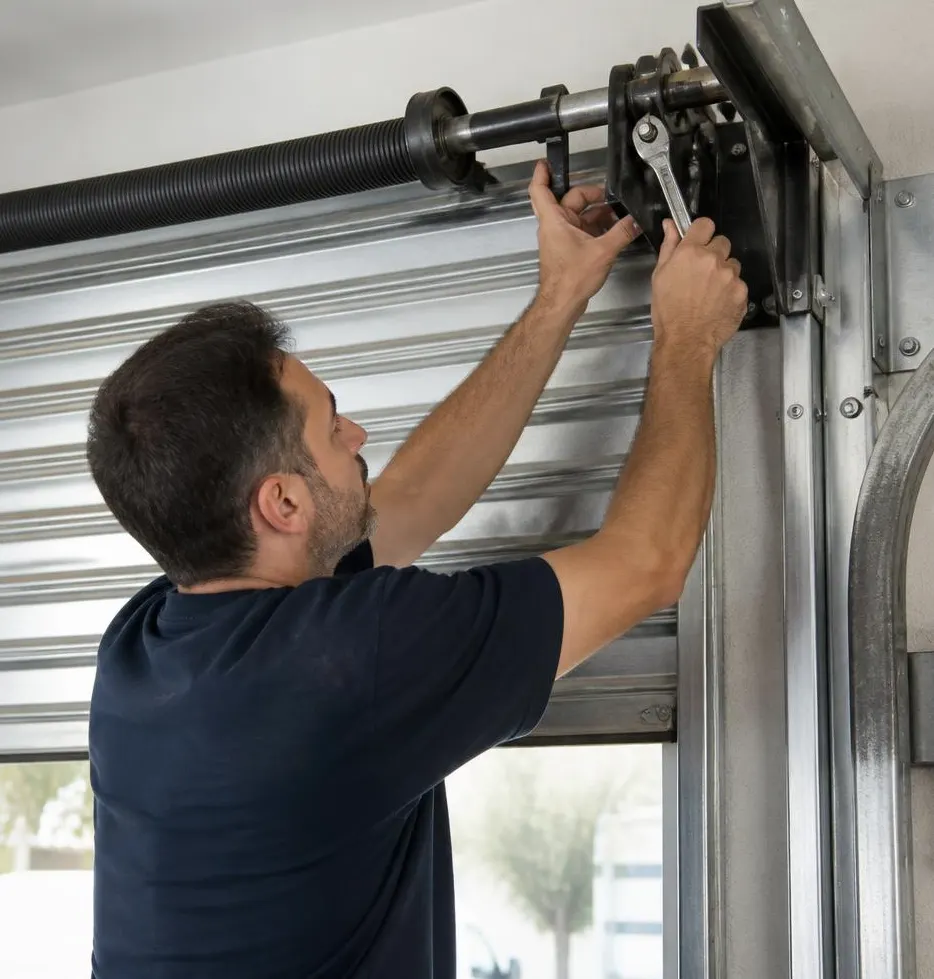
- Tighten visible hardware. Using your socket wrench, snug up the bolts on the hinges, roller brackets, and track mounting plates. Garage doors flex every time they open and close, and that constant movement works bolts loose over months. Do not touch anything connected to the springs or the cables that run from the bottom brackets — more on that below.
- Clean the tracks. Wipe down the inside of both vertical tracks with a rag, then brush or vacuum out any dirt, dead leaves, or dried mud that's collected at the bottom. Built-up debris in the tracks is a common reason doors start binding or rolling unevenly once cold weather thickens the grease inside the rollers.
- Lubricate the moving parts — correctly. Apply the silicone or lithium lubricant to the hinges, the rollers (not the roller wheels themselves if they're nylon, just the metal stem and bearing), and the torsion rod area at the top center of the door, without touching the springs directly. A light coat is enough; wipe away excess so it doesn't drip or collect dust.
- Check the weatherstripping. Run your hand along the rubber seal at the bottom of the door and the vinyl strips on the sides. If it's cracked, flattened, or pulling away from the track, cold air and meltwater will find their way in all winter. Replacement seal is inexpensive and widely available, and swapping it is a reasonable DIY job if the old strip simply slides out of its track.
- Test the balance. Pull the emergency release cord to disconnect the opener, then lift the door by hand about halfway. It should stay in place on its own. If it slides down or shoots up, the springs are out of balance — note it, but don't attempt to adjust anything yourself. Reconnect the opener when you're done testing.
- Test the auto-reverse safety feature. With the opener reconnected, close the door and place a block of wood (a 2x4 on its side works) in its path. The door should reverse on contact. Also check the photo-eye sensors near the floor on each track — wipe their lenses clean and make sure they're aligned and not knocked out of position.
- Check remote and keypad batteries. Cold weather drains batteries faster, and a sluggish remote in a Stark County winter is a frustrating thing to discover at 6 a.m. with ice on the windshield. Swap batteries now rather than waiting for a failure.
What to Leave to a Technician
Everything above is within reach of a homeowner with basic tools and twenty minutes. The following items are not:
- Spring adjustment or replacement. Torsion and extension springs are under extreme tension and have caused serious injuries when handled without the right equipment.
- Cable repair. The cables running from the bottom brackets to the drum are also under load and can snap back if handled incorrectly.
- Bent or misaligned tracks. A track that's even slightly out of plumb needs to be pulled back into alignment with the right tools, not bent by hand.
- Opener force and limit settings. If the auto-reverse test fails, or the door is struggling against an out-of-balance spring, the opener's force settings should not be cranked up to compensate — that masks a mechanical problem instead of fixing it.
When to Call Canton Garage Door
If your balance test showed the door creeping or dropping on its own, or the auto-reverse test didn't trigger, stop there and call us. Those are two of the most common reasons for sudden winter breakdowns, and they're exactly what our garage door maintenance visits are built to catch and correct safely. If the walk-around turned up rust, a cracked panel, or hardware that's bent rather than just loose, that's a job for our garage door repair technicians rather than a DIY fix — especially with Canton's freeze-thaw cycles and road salt working against anything already weakened.
If you're in Canton, Massillon, North Canton, Louisville, Jackson Township, Green, Alliance, or Hartville and want a second set of eyes on your door before winter settles in, give Canton Garage Door a call. We'll check the parts of the system that shouldn't be a DIY job and make sure your door is ready for whatever Stark County's winter brings.