
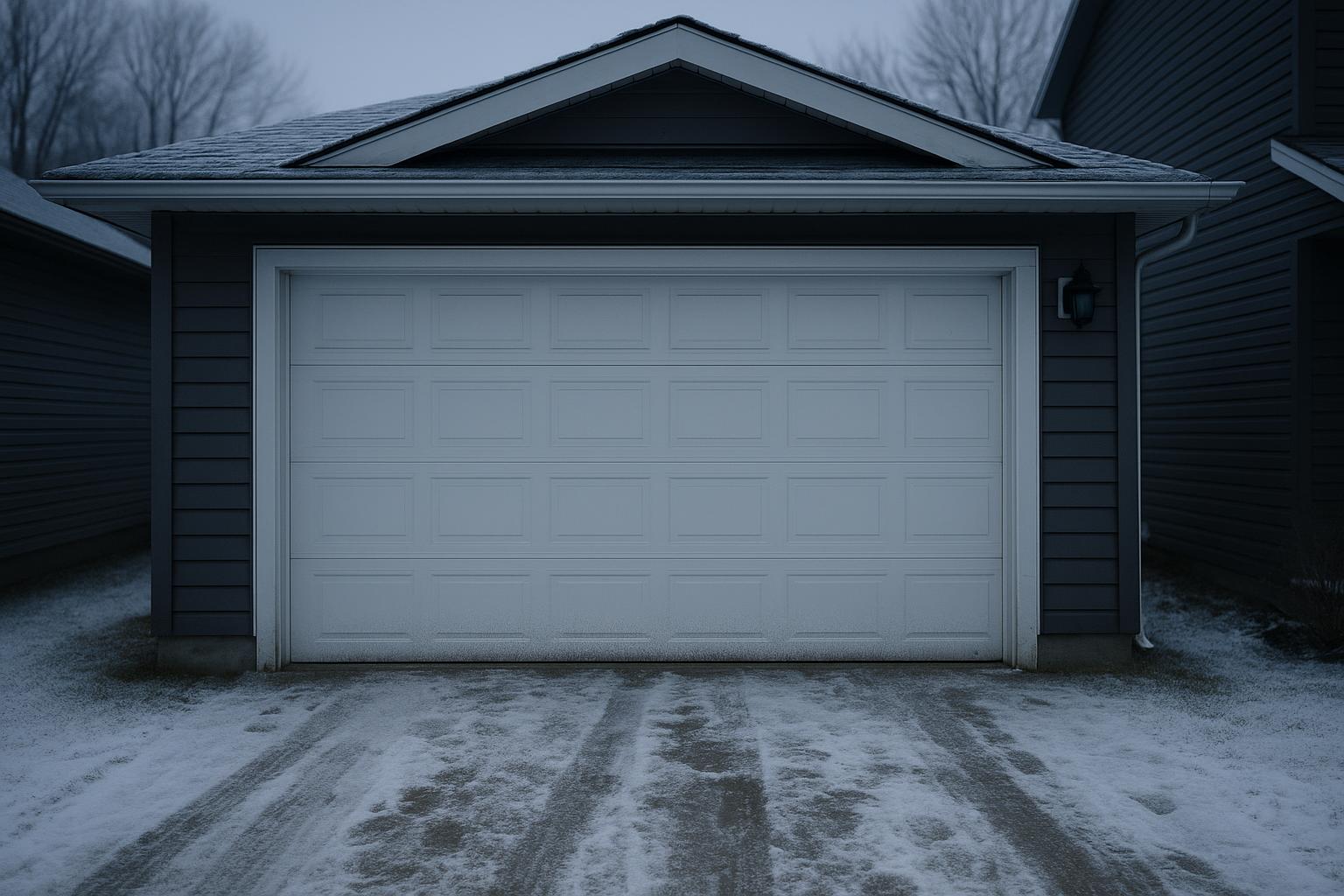
Winter and Your Garage Door: A Common Canton Problem
If you've lived in Canton long enough, you know that winter doesn't hold back. Temperatures drop well below freezing, snow piles up overnight, and ice forms in places you'd never expect — including your garage door. Every winter, we get calls from homeowners across Stark County who wake up to find their garage door completely stuck, partially jammed, or sluggish and unresponsive.
The good news is that most cold-weather garage door problems have straightforward causes and solutions. In this post, we'll walk you through the most common reasons your garage door won't open when temperatures plummet and what you can do about each one.
1. The Weatherstripping Is Frozen to the Ground
This is the single most common reason garage doors get stuck in winter. The rubber weatherstripping along the bottom of your garage door is designed to create a tight seal against the ground, keeping out drafts, rain, and pests. But when water collects beneath that seal and freezes overnight, it essentially glues your door to the garage floor.
What You Can Do
- Never force the door open. Hitting the opener button repeatedly when the door is frozen to the ground can burn out the motor, strip the gears, or damage the weatherstripping itself.
- Use a heat gun or hair dryer to carefully melt the ice along the bottom seal. Work slowly from one side to the other.
- Gently tap along the bottom of the door with a rubber mallet to break the ice bond without damaging the seal.
- Once the door is free, clear any standing water or snow from the area to prevent it from happening again the next morning.
If this keeps happening, it may be time to replace the weatherstripping with a higher-quality seal or apply a silicone-based lubricant to prevent ice adhesion.
2. The Metal Components Have Contracted
Metal contracts in cold weather — it's basic physics. Your garage door system is full of metal parts: tracks, springs, hinges, rollers, and hardware. When temperatures in Canton drop into the single digits or below zero, that contraction can cause several problems.
- Tracks may tighten around the rollers, creating friction that makes the door sluggish or prevents it from moving altogether.
- Springs lose tension as the metal contracts, which means they may not have enough force to lift the door properly.
- Hinges and rollers stiffen up, especially if they haven't been lubricated recently.
What You Can Do
Apply a silicone-based garage door lubricant to the tracks, rollers, hinges, and springs. Avoid using WD-40 as a long-term solution — it's a solvent, not a true lubricant, and it can actually attract dirt and grime over time. A proper garage door lubricant stays in place and keeps everything moving smoothly even in freezing conditions.
If your door still struggles to open after lubrication, the springs may need adjustment or replacement. Spring work is dangerous and should always be handled by a professional.
3. Your Garage Door Opener Is Struggling
Garage door openers are mechanical devices, and cold weather puts extra strain on them. If the door is heavier to lift due to contracted springs or frozen components, the opener has to work harder than it was designed to. This can cause it to stall, reverse, or simply refuse to engage.
What You Can Do
- Check the opener's force settings. Most modern openers have adjustable force controls that determine how hard the motor works to open and close the door. In winter, you may need to increase the force slightly. Consult your owner's manual for instructions.
- If your opener uses a belt or chain drive, inspect it for proper tension. Cold weather can cause belts to stiffen and chains to contract.
- Make sure the opener's light bulb (if applicable) is rated for cold temperatures. Standard bulbs can fail in unheated garages, which isn't a mechanical issue but can make you think something bigger is wrong.
If your opener is more than 10-15 years old and consistently struggles in winter, it may be time to consider a replacement. Newer models are more energy-efficient, quieter, and better equipped to handle temperature extremes.
4. The Garage Door's Safety Sensors Are Blocked or Misaligned
The photo-eye sensors near the bottom of your garage door tracks are required safety features, but they're also sensitive to winter conditions. Snow, ice, frost, or even condensation on the sensor lenses can block the infrared beam and prevent the door from closing — or cause it to reverse immediately after you hit the button.
What You Can Do
- Wipe the sensor lenses clean with a soft, dry cloth.
- Clear any snow or ice buildup around the sensors.
- Check that the sensors are still properly aligned. A bump from a snow shovel or a shift in the ground due to frost heave can knock them out of position. The indicator lights on each sensor should be steady, not blinking.
5. The Garage Itself Is Too Cold
If your garage is uninsulated and unheated, everything inside it — including the garage door mechanism — is exposed to the full force of winter. An insulated garage door can make a significant difference, not just for the comfort of your garage but for the longevity of the door's mechanical components.
Insulated garage doors maintain a more stable temperature inside the garage, which reduces the thermal stress on springs, tracks, and openers. They also help protect anything you store in the garage, from vehicles to tools to paint cans that can freeze and burst.
If you're considering upgrading to an insulated garage door, it's one of the best investments you can make for a Canton home. The energy savings alone can offset the cost over time, and you'll deal with far fewer cold-weather headaches.
Preventive Maintenance Is the Best Winter Strategy
Most winter garage door problems are preventable with a little preparation. Here's a quick checklist to run through before the cold season hits:
- Lubricate all moving parts with a silicone-based garage door lubricant.
- Inspect the weatherstripping for cracks, gaps, or wear and replace it if needed.
- Test the balance of the door by disconnecting the opener and lifting the door manually. It should stay in place when opened halfway. If it doesn't, the springs may need adjustment.
- Clean and align the safety sensors.
- Tighten all hardware, including brackets, bolts, and hinges.
- Schedule a professional tune-up. A trained technician can spot problems you might miss and make adjustments that keep your door running reliably all winter long.
When to Call a Professional
Some winter garage door issues are easy to handle on your own — wiping down sensors, applying lubricant, or clearing ice from the weatherstripping. But other problems require professional attention. If your door is visibly sagging, the springs appear damaged or overly stretched, the opener motor is making grinding or burning smells, or the door simply won't budge despite your troubleshooting efforts, it's time to call in a pro.
At Canton Garage Door, we help homeowners across Canton, Massillon, North Canton, Louisville, Jackson Township, and Green keep their garage doors working through even the toughest Ohio winters. Whether you need an emergency repair, a seasonal tune-up, or a full door replacement, we're here to help — and we show up on time, every time.
Don't wait until you're stuck in your driveway on the coldest morning of the year. Contact Canton Garage Door today to schedule your winter maintenance appointment and keep your garage door running smoothly all season.